What's actually under the paint. The same answers we give dealers and customers when they ask.
Hand-sprayed fiberglass, built one shell at a time in our Jacksboro, Texas shop. One continuous shell — not panels bolted together, not parts shipped in from somewhere else.
Walls, ceiling, and roof are a fiberglass sandwich panel — two hand-sprayed fiberglass skins with closed-cell polyiso insulation board bonded between them.
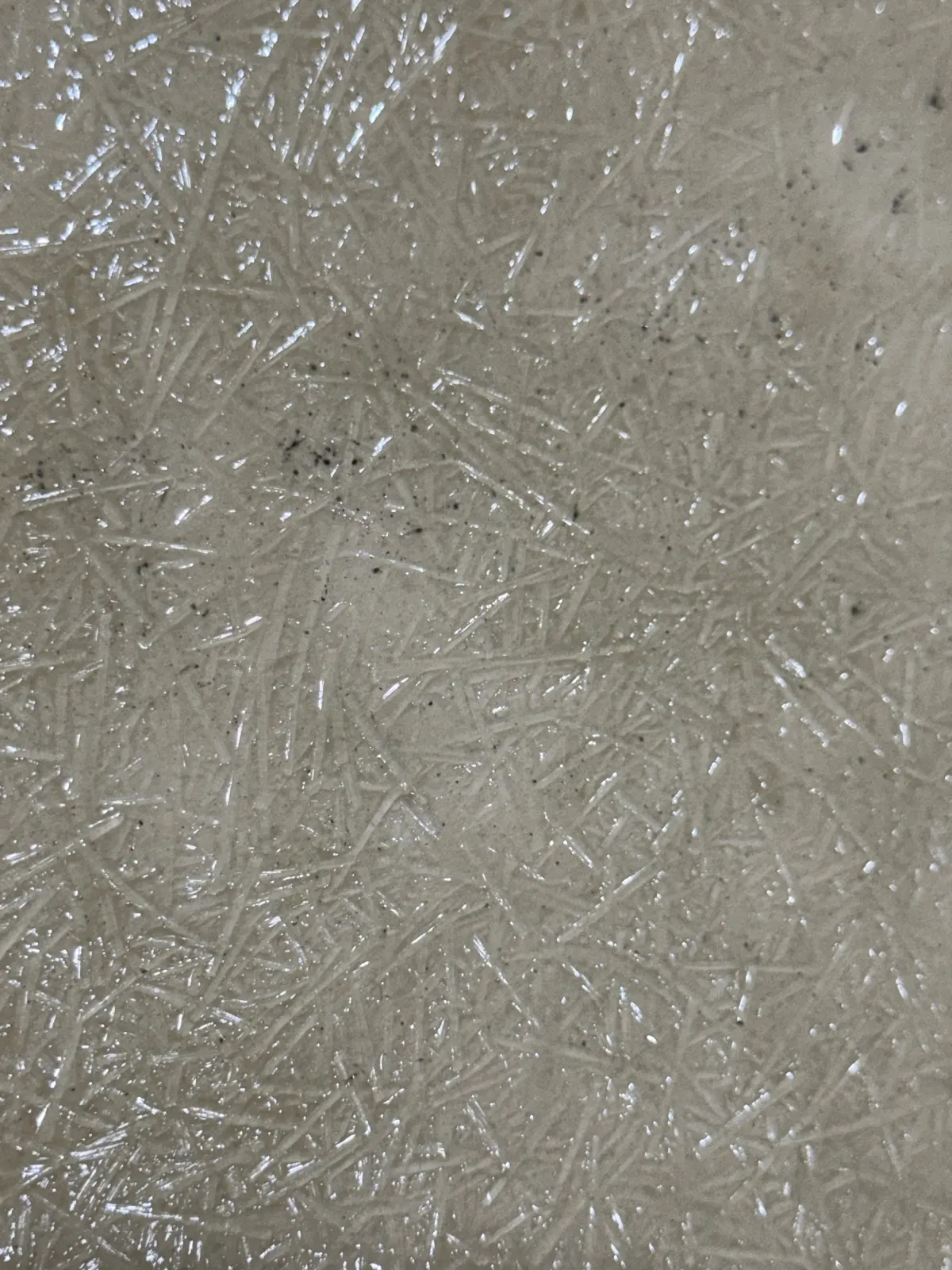
Sprayed inside and out with a chopper gun running 180H assembled roving and C1 DX premium DCPD laminating resin — the resin family the marine and RV industries use for low shrinkage and long-term dimensional stability.
Every wall seam, window perimeter, and floor-to-wall joint is reinforced with chopped strand mat layup. The result is a one-piece monocoque shell with no fastener-through points to leak, flex, or rot.
It's why we put a lifetime warranty on every fiberglass shell — no asterisks, no fine print.
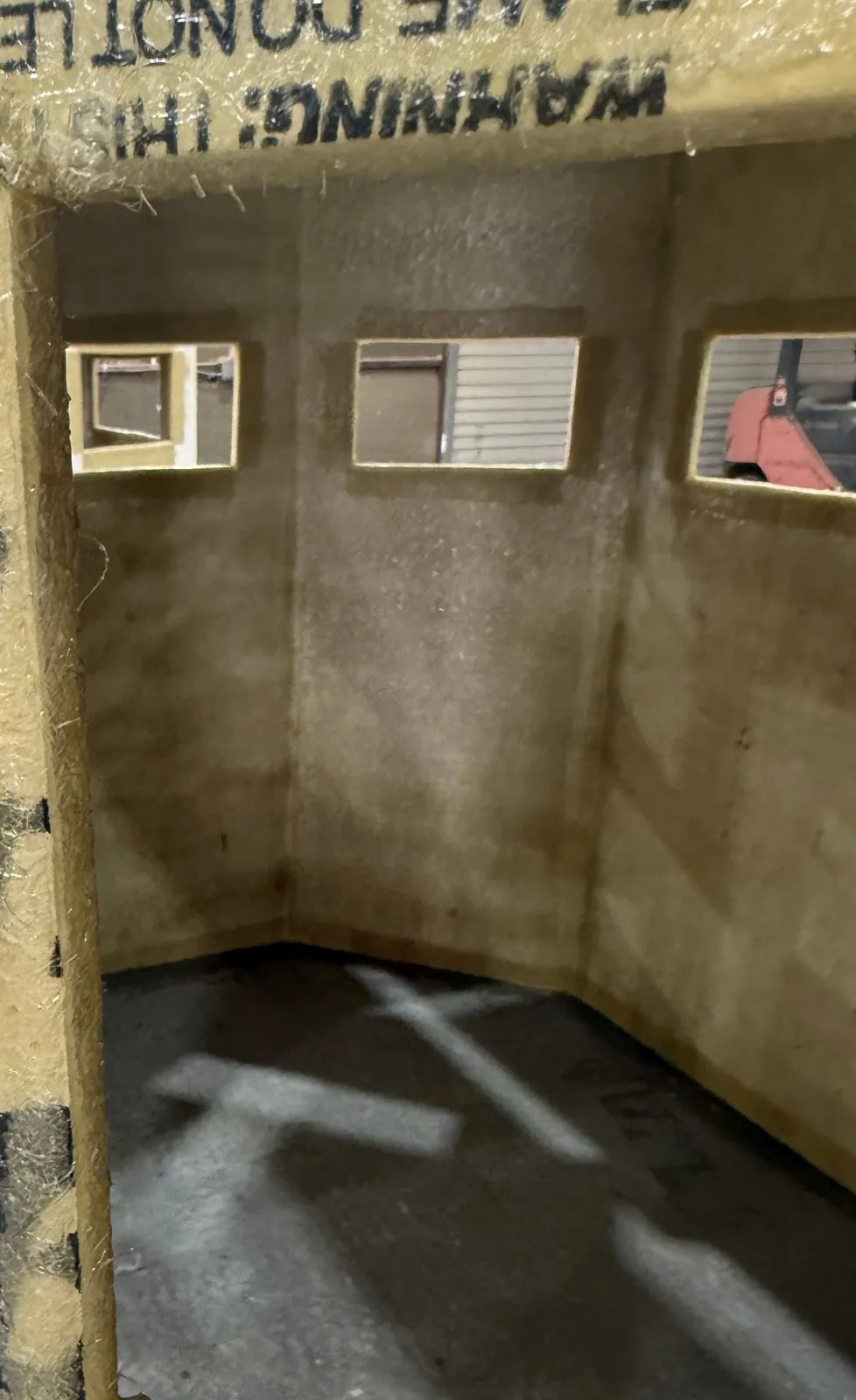
The floor is where a blind gets tested. Mud, water, spills, weather cycling between Texas summers and freezing mornings — the floor takes it all.
We don't use wood. Anywhere in the floor.
The floor in every VisionX blind is a Kay-Cel® Core composite panel — high-density polyurethane foam reinforced internally with fiberglass. Made by Kayco Composites, the same composite the marine industry uses to rebuild boat transoms, stringers, bulkheads, and decks.
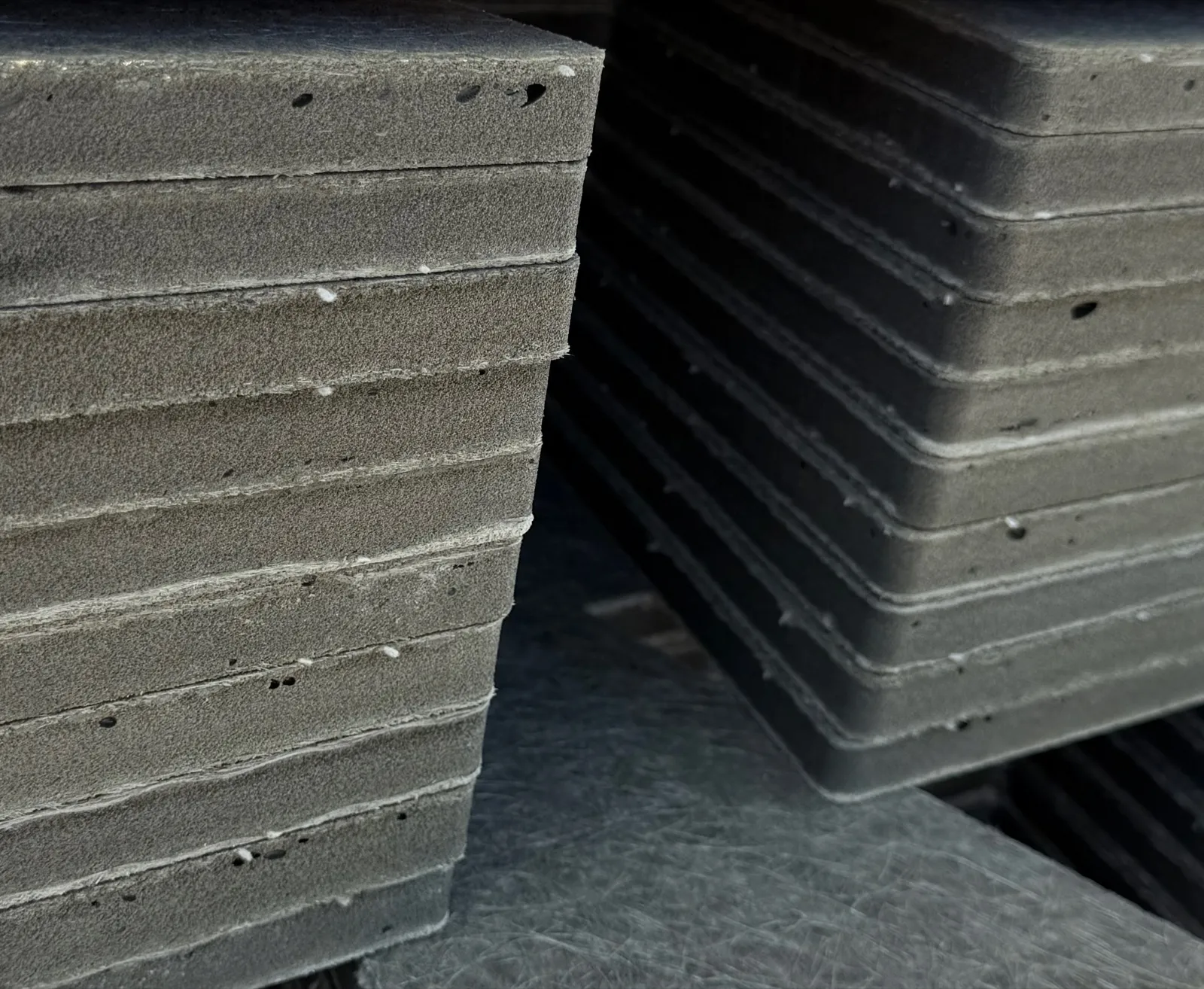
Cells don't communicate. Water can't wick through the panel.
Not "rot-resistant," not "treated." Nothing in it that can rot.
Marine plywood strength at 30–50% less weight.
Wrapped to the shell with a 6″ structural fiberglass mat. Floor and walls become one piece.
There is more material cost in the floor of a VisionX blind than most fiberglass blind manufacturers have in their entire shell. The foundation has to be the strongest part of the build.
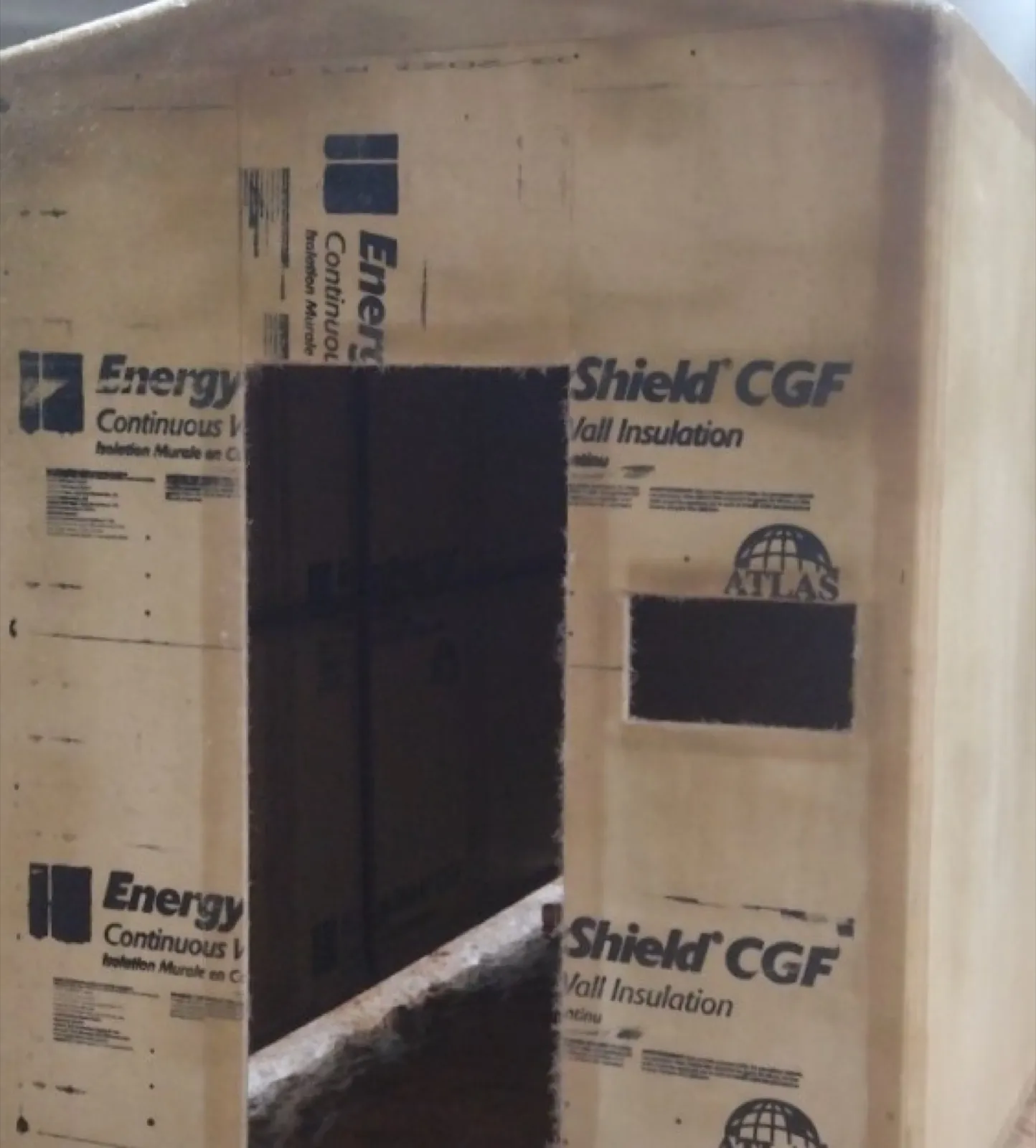
Between the fiberglass skins, every blind is core-filled with Atlas EnergyShield® CGF closed-cell polyisocyanurate board — the highest R-value rigid foam available, with glass-mat facers on both sides.
Mold-resistant (UL 2824), Class A fire rated (ASTM E84), service range −100°F to +250°F.
The insulation does three jobs at once: cuts heat transfer, kills sound resonance, and stiffens the shell into a structural sandwich panel that resists flex and oil-canning.
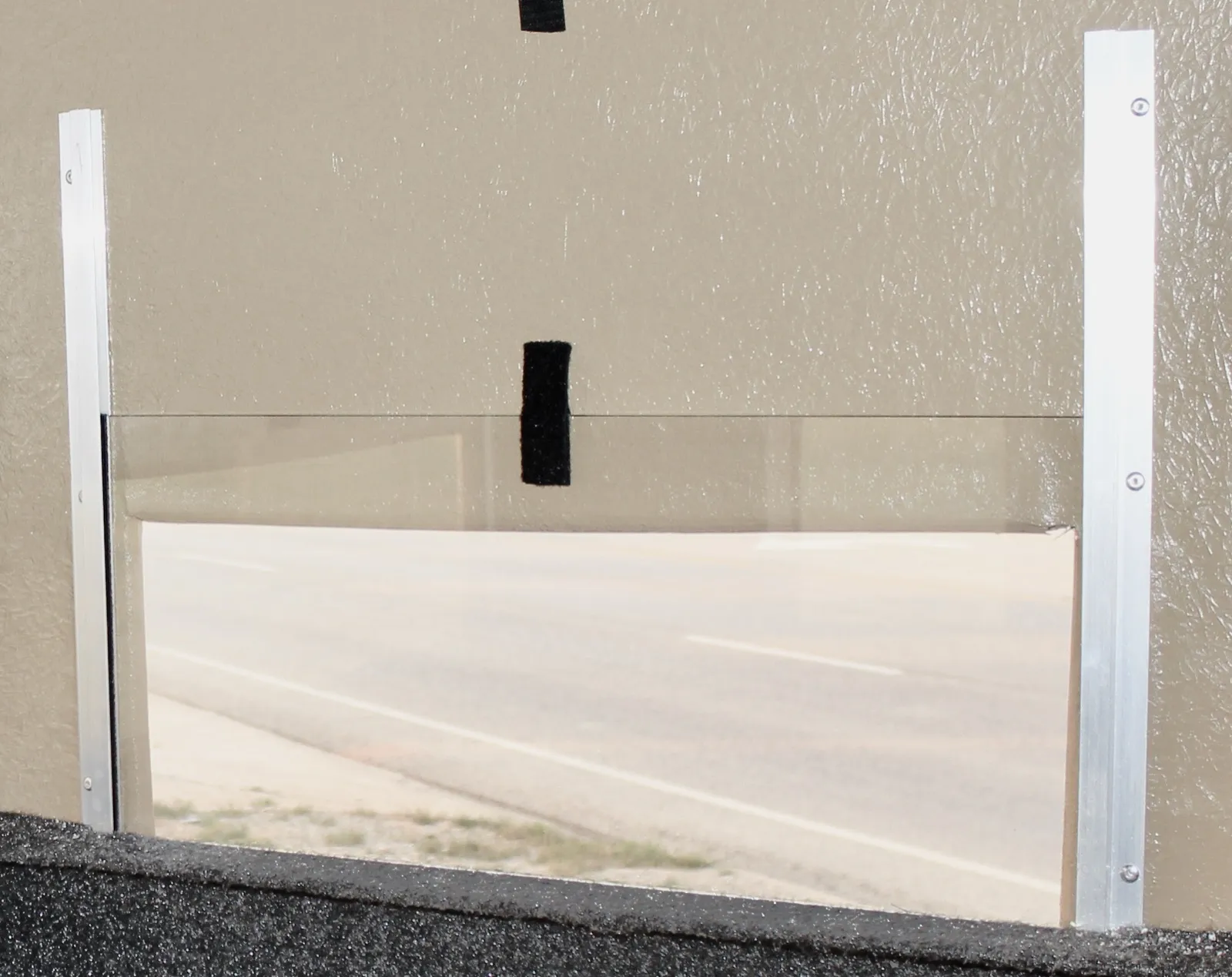
Every standard window slides vertically — up and down, not in and out. Set the height you want, it stays there. Always ready for the shot.
Glass: .220″ clear cast acrylic. Heavy enough to take a hit, optically clear, no flex or rattle. Tinted available as upgrade.
The track is custom-extruded aluminum lined with silent felt — tuned to hold the window wherever you set it. No drift, no slamming, no wedging a stick under it.
Framed glass available too, from The Original Deer Blind Window Co. — any size the customer specs.
Built in-house from heavy ABS plastic, mounted with black stainless steel hardware. Standard above every window and the door, sized to the openings (10″, 18″, 24″, 30″).
Hunt with a window cracked in a hard rain — water stays off your gun, your shelf, and your feet.
Available as a standalone accessory for owners of other blinds. Standard equipment on every VisionX unit.
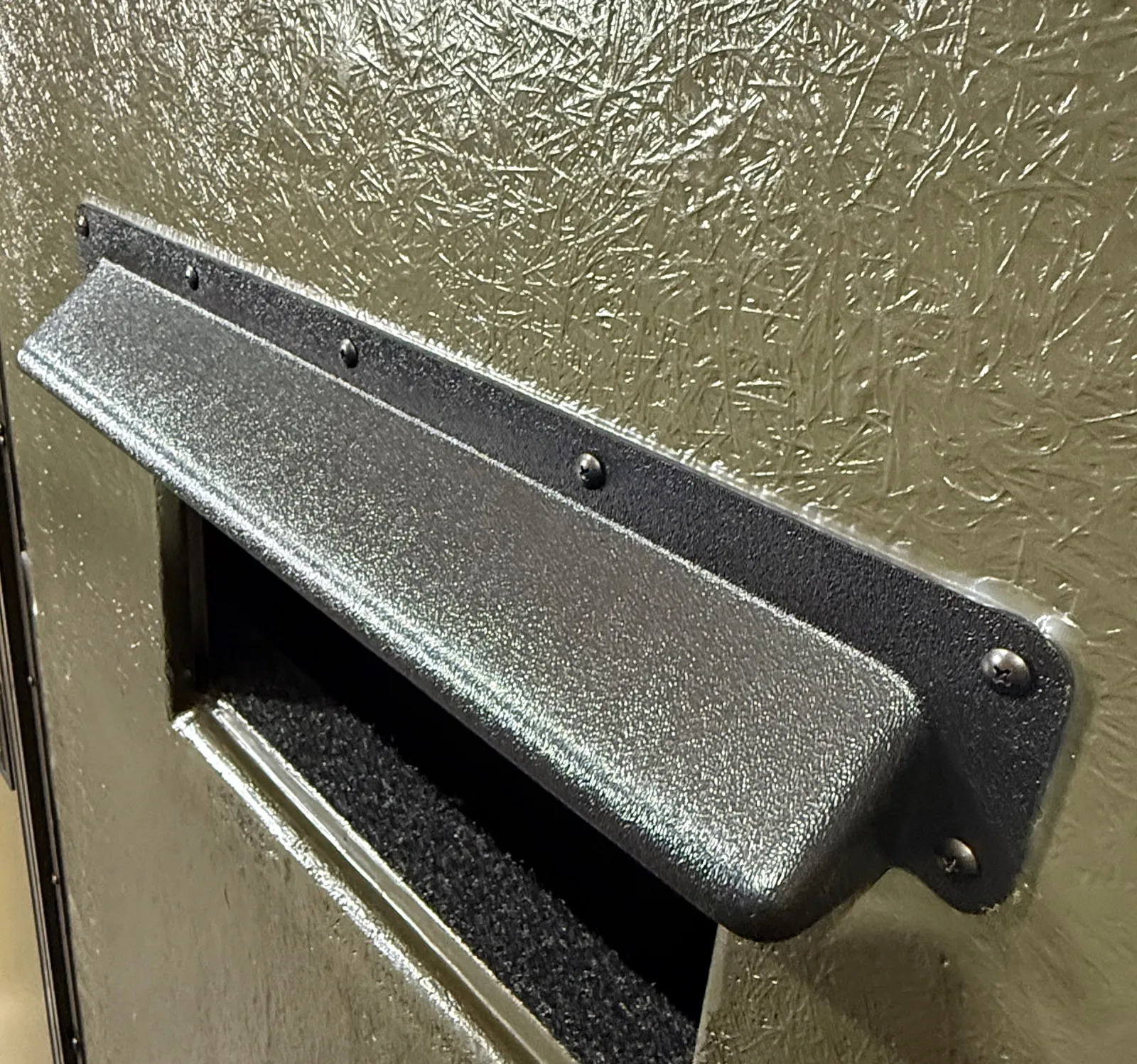
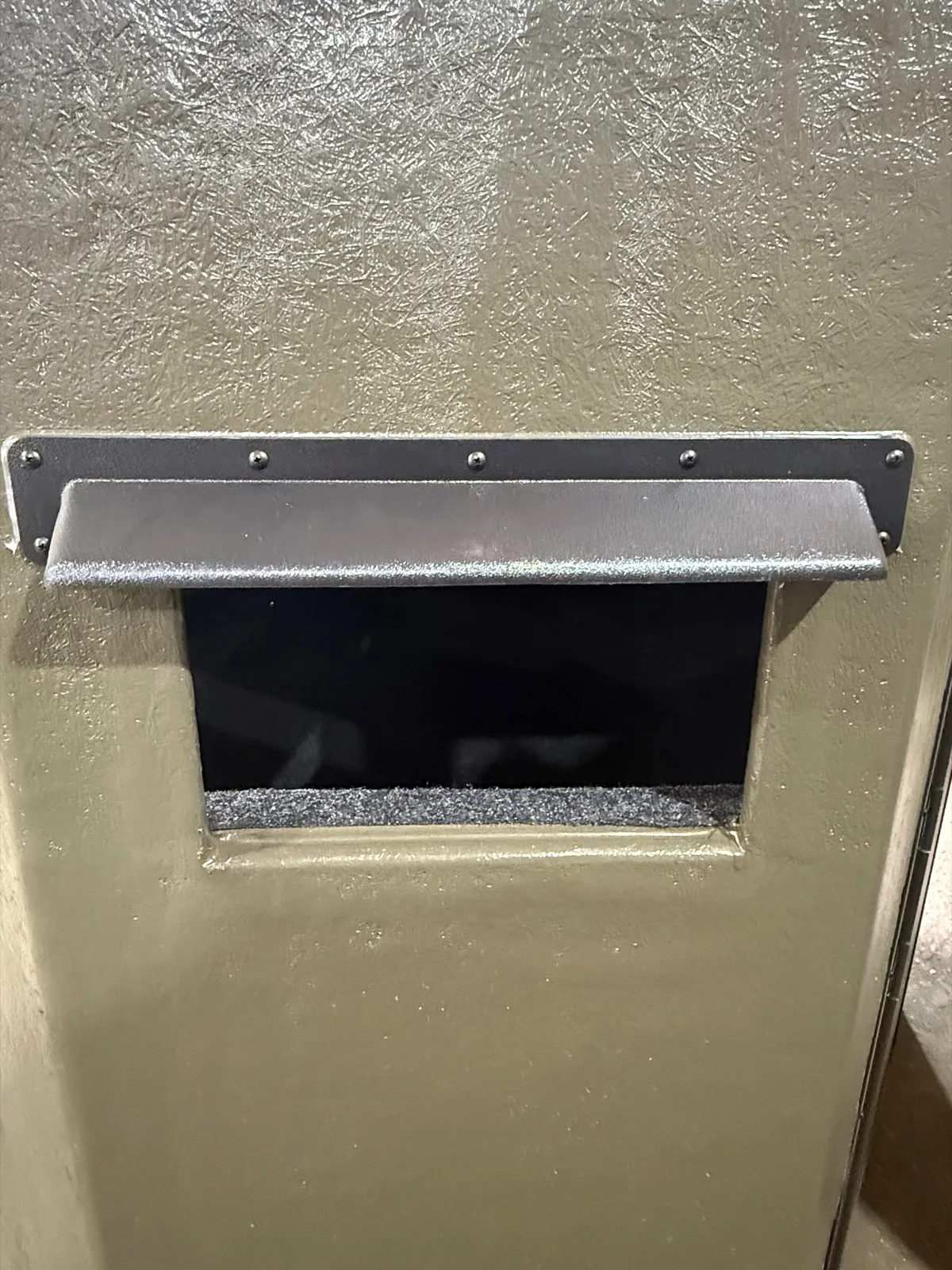
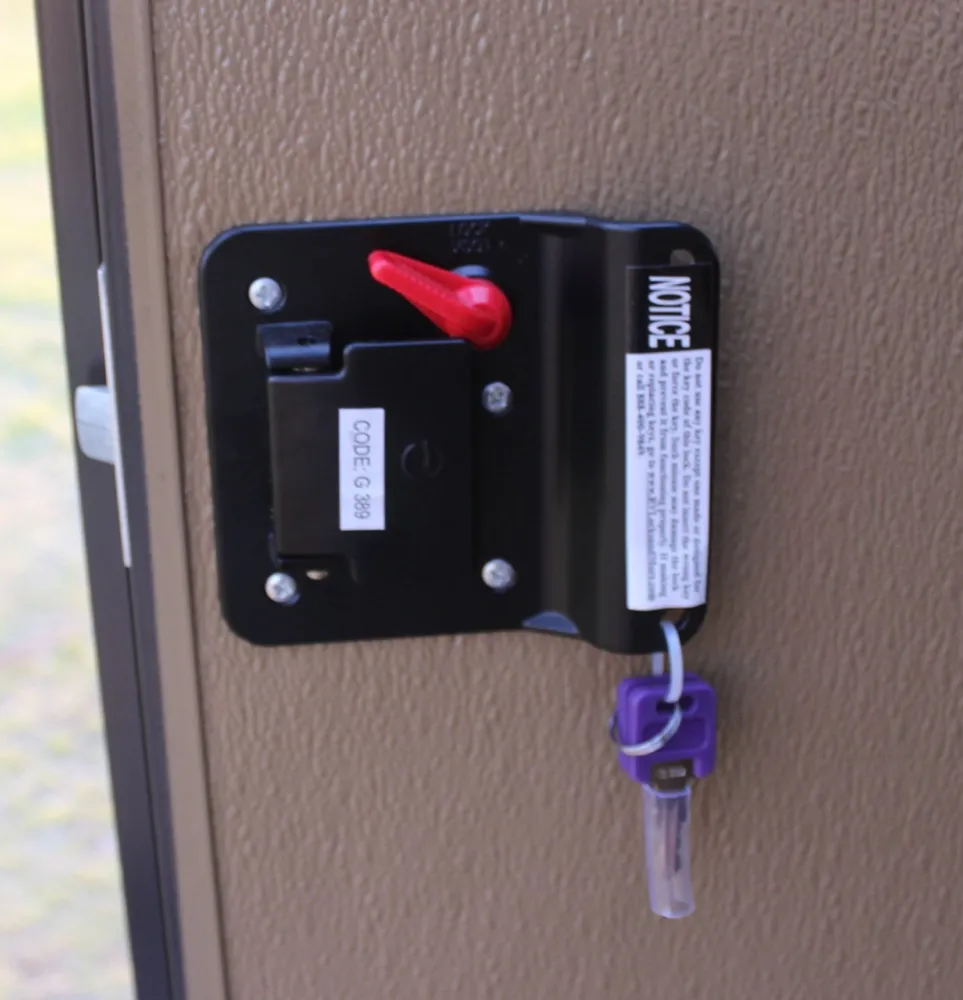
24″ × 60″ Pocahontas fiberglass door with locking hardware. Same construction philosophy as the shell — fiberglass skins, foam core. Will not rot or warp.
Gets a 30″ ABS rain guard above it. Steel deadbolt lock standard.
Carpet on the floor and on the walls up to the bottom of the windows. The wall carpet is the final layer of sound dampening on top of the foam-core sandwich shell.
Combined with felt-lined window tracks and polyiso insulation, it kills the small noises that give a blind away — sleeve brush, rifle barrel bump, chair leg scrape. Also takes the chill off the wall on a cold morning.
Standard: shelf with cup holders, integrated shooting rest, and rifle rest along the front wall. Ready to hunt the day it leaves the lot.
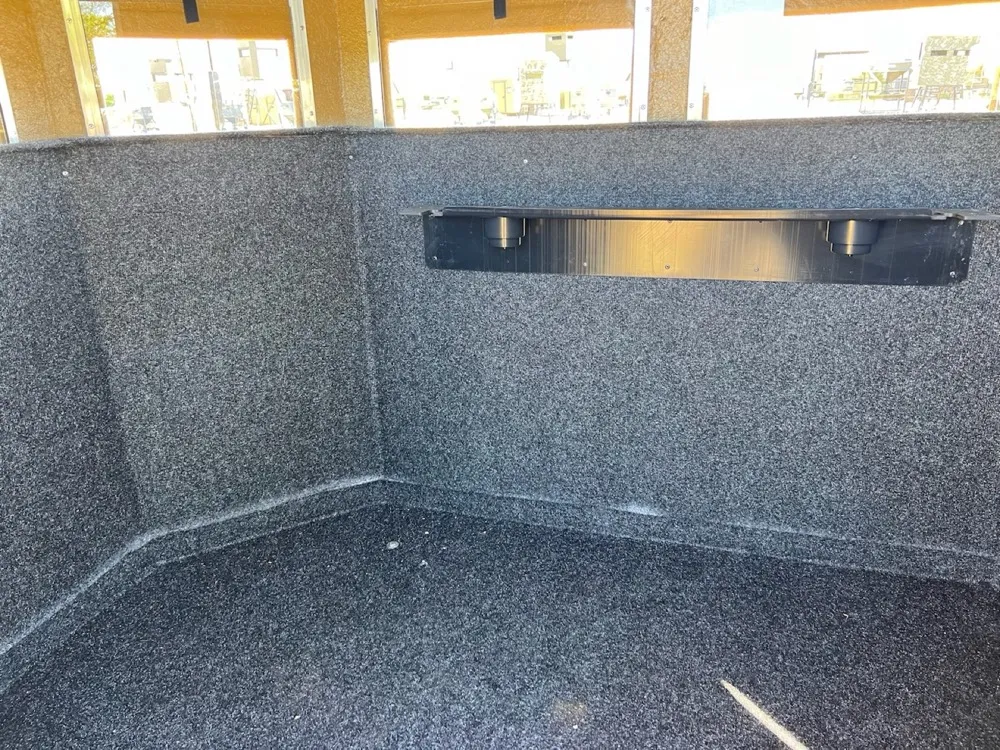
Every VisionX blind can be configured to spec. Spec a custom build in real time using the Blind Builder.
Open the ConfiguratorFabricated in-house from American A36 hot-rolled structural steel. Every tower includes porch, railing, dual-rail steps, and anchoring hardware — no add-ons, no surprises.
Four 2″ × 2″ × 3/16″ A36 hot-rolled angle iron legs. Full-length, no splice joints.
The legs and braces bolt to the one-piece welded base with Grade-5 hardware — so the tower ships flat instead of as an oversized weldment, and goes up square in the field. The strength is in the welded base, the heavy leg section, and the triangulated brace pattern, not in shipping it as one giant piece.
That's a heavier leg section than most blind towers in this price range. It's why a VisionX tower doesn't sway underfoot when you climb in.
A36 is the structural steel grade used in commercial construction — building frames, bridges, trailer chassis. Strong, weldable, doesn't fail.
Cross-braced on every face with 1½″ × 1½″ × 3/16″ A36 hot-rolled angle iron. Multiple cross-braces per face — not just an X.
The brace pattern sheds wind and load triangularly into the legs. That's what lets the tower stand up to weather without skinning the bracing or bending the legs.
Base frame is the same 2×2×3/16 hot-rolled angle, built as a complete welded box with reinforced corners.
Porch deck: 4″ × 1½″ 14-gauge Cee purlin — a structural channel section, not flat plate or expanded metal. Runs the full perimeter.
Railing: 1″ square tube welded into the base frame.
Porch and railing are included on every VisionX tower. No "porch packages." No "railing upgrade." Complete.
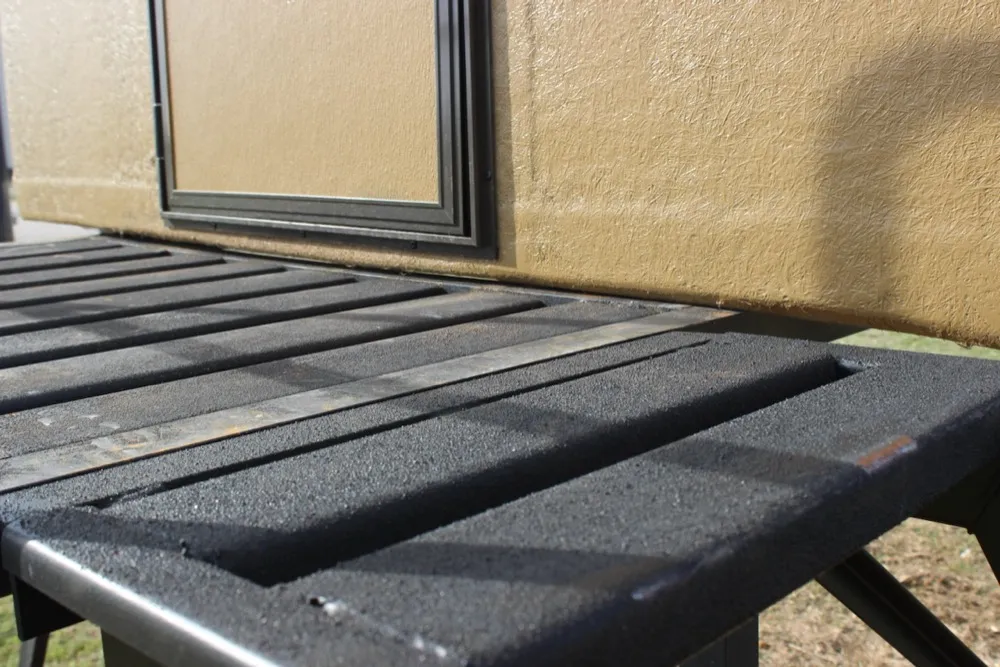
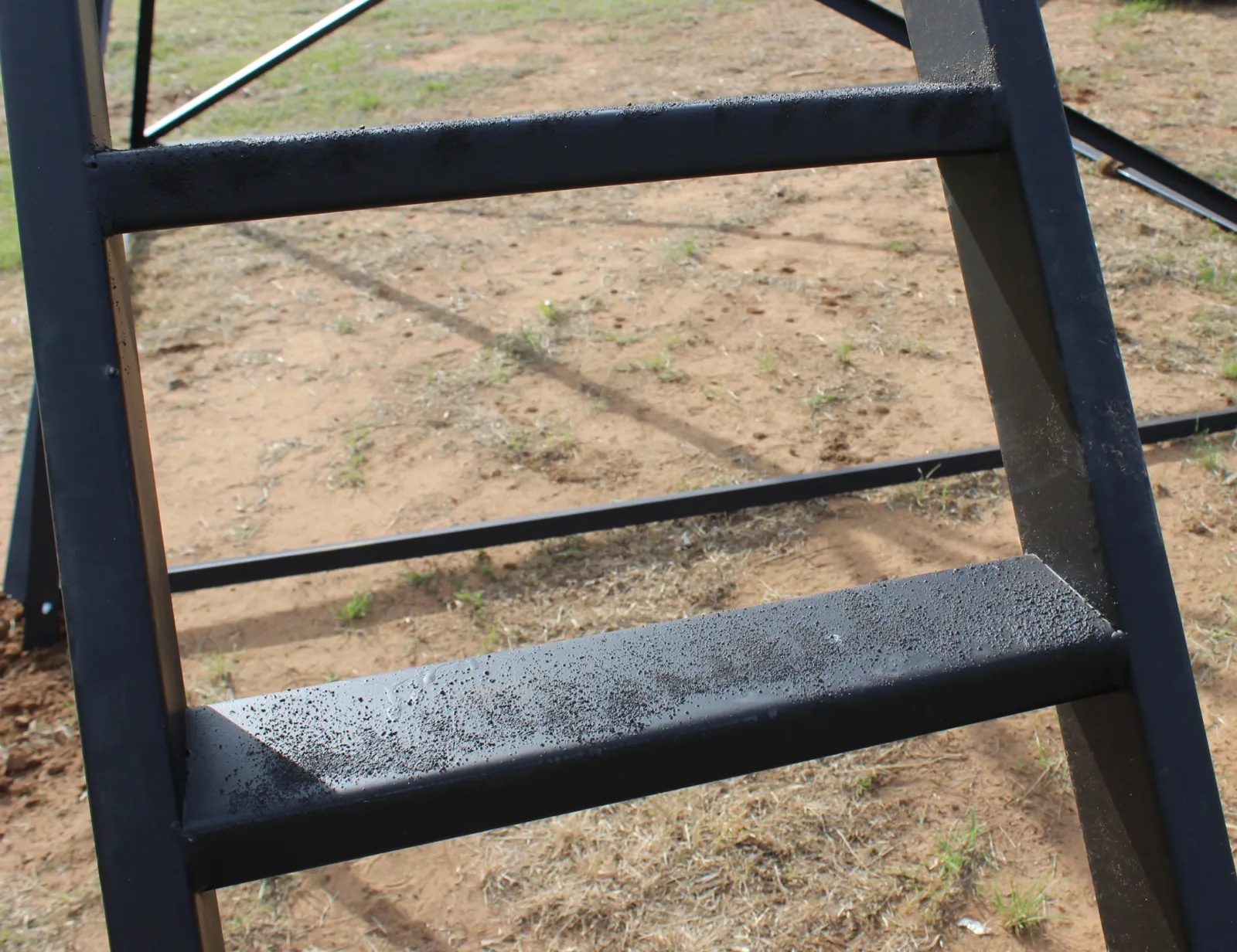
Dual-rail ladder steps share the same 4″ × 1½″ 14-gauge Cee purlin construction as the porch deck. Every step is the full width of the ladder — no narrow rungs to miss in the dark.
Welded rail-to-step, no fasteners, no rattle. Stable underfoot whether you're climbing in with a rifle or hauling out a buck.
Standard equipment on every tower. Not an "add-on."
Each leg terminates in a 3/16″ × 3″ hot-rolled steel foot pad, welded flat to the bottom of the leg and pre-drilled for anchoring.
Spreads the load across a wider footprint and gives you a fixed pattern to bolt or stake the tower to bare ground, a poured pad, or a treated timber pad.
How a tower is anchored is the difference between one still standing after a Texas storm and one that's not.
Standard: 18- to 24-inch driven steel ground stakes through each foot pad. Depth depends on soil — short for caliche, long for sandy pasture.
For maximum holdout, add a screw-in earth anchor in the center of the footprint with steel cable to the underside of the frame. That center tie-down stops any uplift before it starts.
For permanent installs, the foot pads accept anchor bolts into a poured concrete pad.
Properly anchored VisionX towers have come through 75-mph straight-line winds still standing. That's field experience from real setups — anchor yours right and it earns its keep when the weather turns.
Most box blinds in the category cut a corner somewhere. Here's where VisionX is built differently — the spec sheet your dealers can hand a customer.
| Typical Box Blind | VisionX | |
|---|---|---|
| Shell | Plywood or single-wall fiberglass | Insulated fiberglass with closed-cell foam core |
| Insulation | Little to none | Closed-cell foam between shells — quieter, cooler |
| Floor | Plywood or particle board | Kay-Cel composite — won't rot or absorb water |
| Tower | Light-gauge, often sold separately | A36 structural steel — porch, railing & dual-rail steps standard |
| Warranty | 1–2 years, or limited | Lifetime shell + 25-year tower |
| How it's sold | Big-box and online | Wholesale through protected dealers — your MSRP holds |
"Typical" reflects common features in the value end of the category, not any one brand.
Approved dealers get printable spec sheets, dealer-cost pricing, and POS materials.
Become a Dealer